
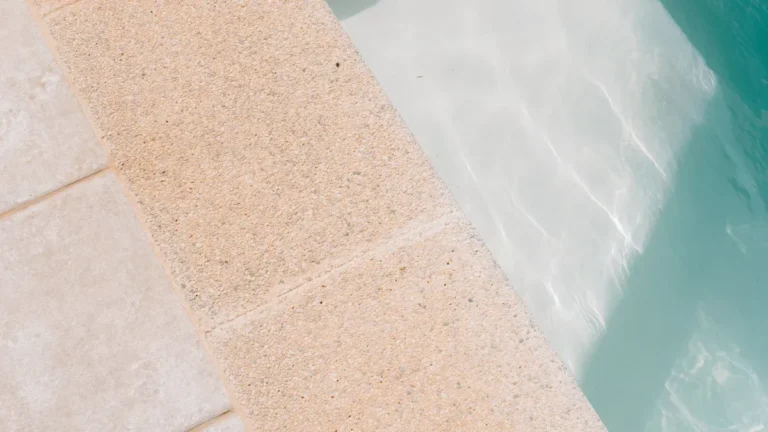
The best pool tile for a striking and timeless look often comes from white pool tiles. These tiles reflect light beautifully and make swimming pool tiles appear clean and inviting. White pool tiles suit nearly any design, from classic to modern. Choosing the right pool tile material helps with slip resistance and easy maintenance. Homeowners often prefer the best swimming pool tiles for their durability and safety.
Key Takeaways
- White pool tiles create a clean and modern look, enhancing the pool’s appearance and making it feel more inviting.
- Safety is improved with white pool tiles, as they enhance visibility and help spot debris or changes in water depth.
- Maintenance is easier with white tiles; dirt and stains are easily visible, allowing for quick cleaning and upkeep.
- White tiles are versatile and suit various pool styles, from minimalist to traditional, adapting to changing design trends.
- Choosing the right material, like porcelain or glass, ensures durability and longevity, making your pool tiles a smart investment.
1 White Pool Tile Designs
1.1 Classic Glossy Porcelain
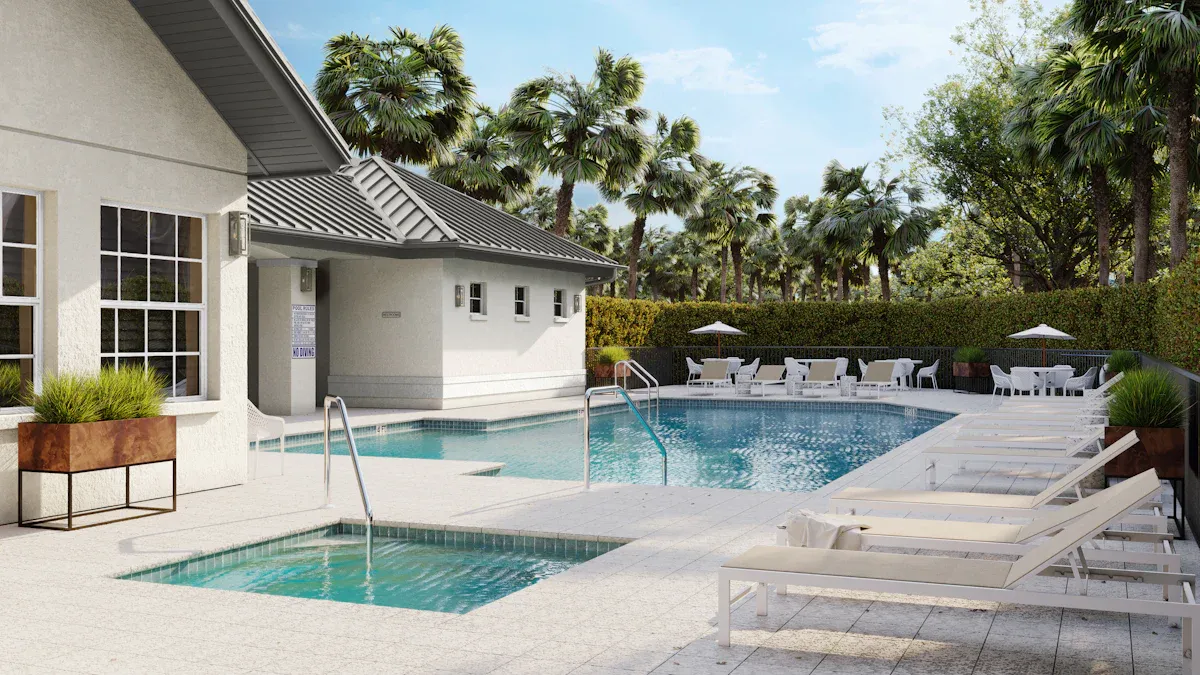
Classic glossy porcelain pool tiles remain a top choice for many pool owners. These swimming pool tiles create a clean, open feel and often give the water a soft blue tint under sunlight. The popularity of white pool tiles stands out in modern pool design. The table below compares the popularity of different tile colors and their features:
| Tile Color | Popularity | Key Features |
|---|---|---|
| White | High | Clean, open feel; soft blue tint under sunlight; ideal for modern designs |
| Blue | Highest | Classic choice; evokes a natural water feel |
| Green | Moderate | Earthy, natural look; blends with landscaping |
| Gray | Moderate | Contemporary, sleek appearance; hides dirt well |
| Earth Tones | Low | Warm, rustic feel; less common in modern pools |
White pool tiles highlight cleanliness and make it easier to spot dirt or algae. Many modern homes with minimal color schemes prefer these swimming pool tiles for their fresh look. Different tile styles in glossy porcelain can fit both classic and custom pool designs.
1.2 Iridescent Glass Styles
Iridescent glass pool tiles offer a unique visual effect. These swimming pool tiles create shimmering rainbow-like displays and dynamic plays of light and shadows. The colors and patterns change throughout the day, giving the pool a lively appearance. Many pool owners choose these tiles to add a custom touch and enhance the overall design. Iridescent glass styles work well with mosaic designs and custom tile patterns, making them popular for pools that want to stand out.
- Shimmering rainbow-like displays
- Dynamic plays of light and shadows
- Ever-changing color patterns
1.3 Textured and Patterned Tiles
Textured and patterned pool tiles improve both safety and style. These swimming pool tiles often feature anti-slip surfaces, which help prevent accidents and protect swimmers. The table below shows how different features benefit pool areas:
| Feature | Benefit |
|---|---|
| Anti-slip surfaces | Prevent accidents and ensure swimmer protection |
| Grip levels | Accommodate different areas around the pool, such as walking paths, steps, and pool edges |
Patterns and colors in these tiles can match any pool design. Many homeowners use different tile styles to create custom looks and improve safety. Mosaic designs and patterns add visual interest and help define pool zones.
1.4 Accent Borders and Trends
Accent borders and the latest trends in pool tiles can transform a pool’s appearance. Many modern pools use geometric patterns, matte finishes, and large format tiles. These trends create a seamless and minimalist look. Mosaic tiles introduce detailed patterns and colors, while natural stone looks provide an organic feel. The most popular trends include:
- Geometric patterns for bold shapes
- Matte finishes for a sophisticated look
- Large format tiles for a seamless appearance
- Mosaic tiles for detailed patterns and colors
- Natural stone look for organic textures
Accent borders allow for custom designs and highlight the pool’s edge. Following current trends helps homeowners achieve a modern and stylish pool area.
2 Pool Tile Materials
2.1 Porcelain Pool Tiles
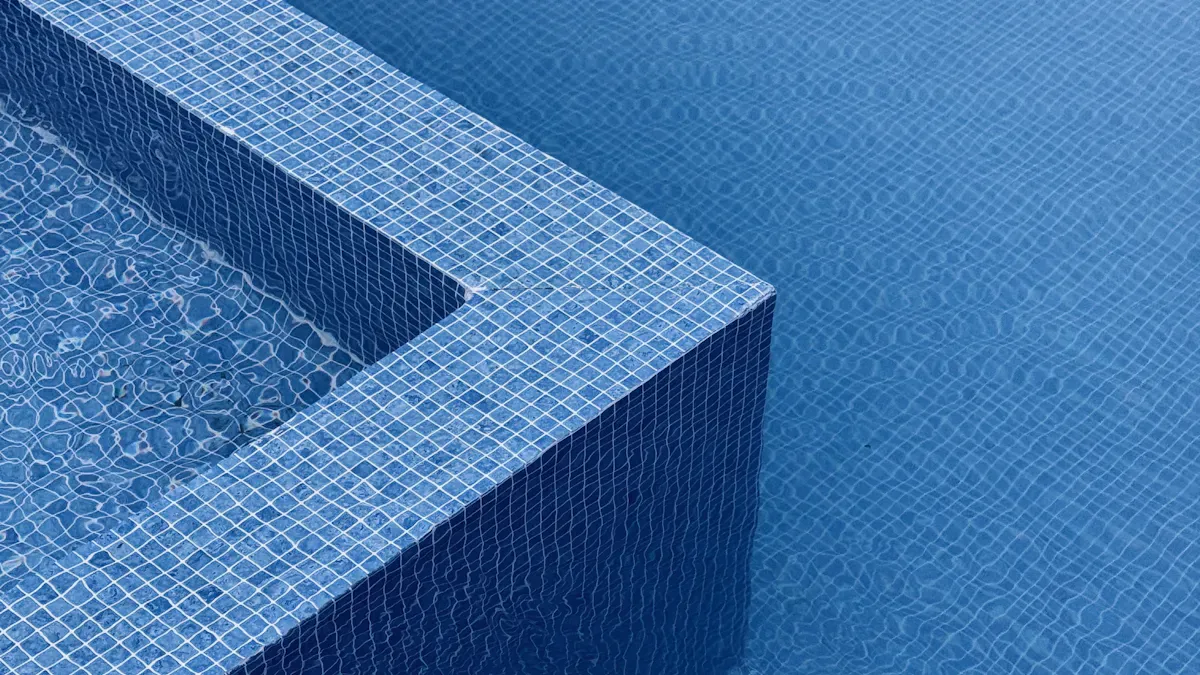
Porcelain pool tiles are a top choice for many pool owners. These tiles have low water absorption, which makes them ideal for submerged areas. Porcelain pool tiles resist cracking, staining, and damage from freeze-thaw cycles. Many porcelain tiles are frost-resistant, so they work well in colder climates. Their slip resistance helps keep swimmers safe. Porcelain pool tiles are more affordable than glass pool tiles and last longer than many other pool tile materials. They require less maintenance, which adds to their value.
| Tile Type | Durability Features | Lifespan Benefits |
|---|---|---|
| Porcelain | Resistant to freeze-thaw cycles, low water absorption | Longer lifespan, less maintenance and replacement costs |
2.2 Glass Pool Tiles
Glass pool tiles create a bright and colorful look. These tiles reflect light and keep their color for many years. Glass pool tiles have minimal water absorption, which prevents damage and reduces maintenance. Their vibrant color retention makes them popular for modern pools. Glass pool tiles cost more than porcelain or ceramic and require skilled installation. They offer excellent slip resistance when textured.
| Key Benefit | Description |
|---|---|
| Vibrant Color Retention | Maintains brilliant appearance even after prolonged exposure |
| Exceptional Light Reflection | Creates stunning visual effects and enhances pool luminosity |
| Minimal Water Absorption | Prevents structural degradation and reduces maintenance |
2.3 Ceramic Pool Tiles
Ceramic and porcelain tile options are common in pool design. Ceramic pool tiles are affordable and come in many colors and patterns. These tiles resist stains, scratches, and fading. Ceramic and porcelain tile both offer good slip resistance, but ceramic tiles have higher water absorption. This makes them less durable in freezing temperatures. Ceramic pool tiles are easy to cut and install, which lowers labor costs. They last for decades with proper care.
| Tile Type | Durability Features | Lifespan Benefits |
|---|---|---|
| Ceramic | Stain-resistant, scratch-resistant, fade-resistant | Longer lifespan, less maintenance and replacement costs |
2.4 Natural Stone Options
Natural stone pool tiles add a unique look to any pool. Granite, travertine, and coral stone are popular choices. Granite offers high durability and excellent salt resistance. Travertine is slip-resistant and moisture-resistant but needs sealing. Coral stone works well in saltwater pools but requires frequent sealing. Limestone is not ideal for saltwater pools because it can degrade quickly.
| Stone Type | Durability | Salt Resistance | Maintenance Considerations | Aesthetic Appeal |
|---|---|---|---|---|
| Granite | High | Excellent | Requires regular sealing | Versatile colors |
| Travertine | Moderate | Good | Needs good sealing | Natural look |
| Coral Stone | High | Excellent | Frequent sealing needed | Unique texture |
2.5 Material Pros and Cons
Choosing the right pool tile materials depends on quality and durability, slip resistance, and cost. Ceramic and porcelain tile options are affordable and easy to maintain. Porcelain pool tiles offer the best durability and frost resistance. Glass pool tiles provide vibrant color and light effects but cost more. Natural stone tiles give a unique look but need more maintenance and sealing. Limestone should be avoided in saltwater pools.
| Tile Type | Pros | Cons |
|---|---|---|
| Ceramic | Affordable, variety, easy installation | Higher water absorption, lower durability, not frost-resistant |
| Porcelain | Low water absorption, high durability, frost resistance | Higher cost, challenging installation |
| Glass | Vibrant color, light effects, minimal water absorption | Expensive, needs skilled installation |
| Natural Stone | Unique look, slip resistance (travertine, coral stone) | Needs sealing, some types not suitable for saltwater |
Tip: If you want to save on costs, porcelain is the best option for pool designs.
3 Advantages of White Pool Tiles
3.1 Clean and Modern Look
White pool tiles create a fresh and modern look in any pool design. Lighter colors, especially white, reflect natural light and make the water look clear and inviting. This effect helps the pool blend with its surroundings and supports a calm, tranquil atmosphere. Many modern pool designs use white swimming pool tiles to achieve a seamless appearance. The clean look of white tiles also highlights the water’s clarity and makes the pool area feel more open. This trend is popular in both new and renovated pools.
3.2 Safety and Visibility
Safety is a top priority in pool design. White pool tiles improve visibility by making it easier to spot debris, algae, or changes in water depth. Swimmers can see the bottom of the pool clearly, which helps prevent accidents. Many ceramic and porcelain tile options offer textured surfaces for better grip. These patterns reduce the risk of slipping, especially on steps and pool edges. Good visibility and slip resistance are important for families and public pools.
3.3 Easy Maintenance
White swimming pool tiles are known for easy cleaning and low maintenance requirements. Dirt and stains are easy to spot on white surfaces, so regular cleaning keeps the pool looking its best. Ceramic and porcelain tile choices resist stains and fading, which reduces long-term maintenance requirements. Many pool owners choose these tiles because they simplify pool care and help maintain a bright, fresh look year-round.
Tip: Regular cleaning and proper care extend the life of your pool tile and keep patterns and colors looking new.
3.4 Versatility for Pool Styles
White pool tiles work well with many pool styles and design themes. They fit minimalist, traditional, Mediterranean, and tropical designs. Homeowners can use different patterns, colors, and custom layouts to match any design vision. White tiles never go out of style and can brighten the pool area, making it feel larger. Ceramic and porcelain tile options allow for creative patterns and custom borders, which follow the latest trends in pool design.
- White tiles suit minimalist, traditional, and custom pool designs.
- They provide a timeless look and adapt to changing trends.
- Bright colors and unique patterns can be added for a custom touch.
- Easy cleaning and low maintenance requirements make them practical.
4 Best Pool Tile Buying Guide
4.1 Assessing Pool Type and Needs
Selecting the best pool tile starts with understanding your pool type and specific needs. Different swimming pool tiles suit various pool shapes and sizes. Smaller pools often benefit from mosaic tiles, which create depth and make the space appear larger. Larger tiles work well in expansive pools, offering a modern look and easier maintenance. The size and shape of your pool influence tile selection and the overall design.
When choosing pool tiles, consider the following:
- Material types such as sandstones, limestone, granite, and glass tiles.
- Safety features like slip resistance, especially for families with children.
- Maintenance requirements; larger tiles reduce cleaning costs due to fewer seams.
- Aesthetic considerations; select colors and patterns that match your home décor and desired ambiance.
Pool tile design considerations include matching the tile to the pool’s purpose. For example, a family pool may require textured tiles for safety, while a luxury pool might focus on custom patterns and colors. Pool tile installation considerations also play a role in ensuring durability and safety.
4.2 Budget and Cost Factors
Budget is a major factor when choosing swimming pool tiles. The cost of pool tile replacement averages around $15,000, but prices can range from $2,000 to $70,000 depending on pool size and materials. Basic ceramic tiles start at $1.00 per square foot, while premium glass mosaics can reach $100.00 per square foot.
Budget constraints often guide homeowners toward affordable materials like ceramic and porcelain tile. These options provide style and durability without exceeding financial limits. Luxurious materials such as natural stone enhance the look but increase costs. Establishing a clear budget helps narrow down choices and ensures you select the best pool tile for your needs.
Tip: Compare prices and materials before making a final decision. Ceramic and porcelain tile offer excellent value for most pool designs.
4.3 Durability and Longevity
Durability is essential for swimming pool tiles. The best pool tile must withstand moisture, impact, and wear. Moisture resistance prevents degradation in wet environments. Impact tolerance is important for areas with high foot traffic to avoid cracks. Wear resistance ensures tiles maintain their look and functionality over time. Chemical stability is necessary for tiles exposed to cleaning agents and pool chemicals. Tiles should also withstand temperature fluctuations without damage.
When evaluating pool tiles, check for certifications and standards:
| Certification/Standard | Description |
|---|---|
| DCOF | Values of ≥0.42 for flooring, ≥0.60 wet/dry floors. |
| Water Absorption | Impervious, Tiles exhibiting 0.5% or less. |
| Frost Resistant | Yes. |
| Scratch Hardness | MOH’s 6-7. |
| Breaking Strength | Exceed PSI loads. |
| Chemical Resistance | Chemical resistant. |
| Abrasion Resistance | Class 3-5. |
| Stain Resistance | Class A. |
| Mounting Method | Free of glue and mesh backing. |
| Equivalent US/ISO Standards | Slip Resistance, Abrasion Resistance, Frost Resistance, Water Absorption, Chemical Resistance, Break Strength, Stain Resistance, Scratch Hardness. |
Avoid limestone for saltwater pools, as it can degrade quickly. Marble or travertine are better alternatives for longevity and durability.
4.4 Installation Tips
Proper installation is crucial for the best pool tile performance and lifespan. Professional installation ensures tiles last 25+ years with minimal maintenance. Amateur installation often leads to major repairs within 3-7 years.
| Installation Type | Expected Lifespan | Maintenance Needs |
|---|---|---|
| Professional Installation | 25+ years | Minimal maintenance |
| Amateur Installation | 3-7 years | Major repairs needed |
Key installation tips for slip resistance:
- Surface preparation: Remove existing materials and clean the substrate for proper adhesion.
- Tile selection: Choose tiles designed for underwater environments with slip-resistant surfaces.
- Adhesive application: Follow manufacturer instructions for applying a bond coat after acid washing the pool shell.
- Grouting techniques: Use proper grouting methods to enhance slip resistance.
Anti-slip solutions include:
- Anti-Slip Spray: Epoxy aerosol for textured finish, ideal for fiberglass and acrylic surfaces.
- Stone Grip: Improves traction on tiles, effective underwater.
- Deck Grip: Non-slip coating for sealed tiles and wood decks, resistant to chemicals and UV rays.
Professional installers select materials with thermal shock resistance and design expansion joints to prevent structural movement. Using pool-rated materials protects against harsh chemicals and ensures long-lasting swimming pool tiles.
Note: Always check for certifications like DCOF, water absorption, and frost resistance before installation.
4.5 Where to Buy Pool Tiles
High-quality pool tiles are available both online and in physical stores. The Tile Shop offers a selection of pool-rated tiles made from glass and porcelain. Keystone Tile provides a variety of collections online, making it easy to explore different colors, patterns, and trends. These retailers offer tiles that meet industry standards for durability and safety.
When shopping for swimming pool tiles, look for stores that provide certified products. Check for slip resistance, water absorption, and chemical resistance. Many suppliers offer custom options to match your design vision and pool style.
Tip: Visit local showrooms to see tile samples in person. Online collections allow you to compare colors, patterns, and trends before making a purchase.
Choosing the best pool tile involves careful consideration of pool type, budget, durability, installation, and sourcing. Focus on materials that offer longevity, safety, and easy maintenance. Match colors and patterns to your design preferences and follow current trends for a modern look. Ceramic and porcelain tile remain popular for their value and versatility. Custom designs and unique patterns help create a pool area that stands out.
Choosing the best swimming pool tiles involves balancing material types, safety, and design flexibility. The table below highlights key considerations:
| Consideration | Description |
|---|---|
| Material Types | High-quality pool tiles provide waterproof, easy-to-clean surfaces that prevent algae buildup. |
| Safety | The right swimming pool tiles improve aesthetics and long-term performance. |
| Design Flexibility | Swimming pool tiles maintain structural integrity and offer design options. |
White swimming pool tiles deliver lasting benefits. Custom patterns and finishes enhance aesthetics. Slip-resistant surfaces improve safety. Smooth tiles reduce maintenance. Use the buying guide to select swimming pool tiles that fit your pool size, style, and lifestyle. Consult a professional for expert advice.
FAQ
What makes pool tiles different from regular tiles?
Pool tiles have special features. Manufacturers design them to resist water, chemicals, and fading. These tiles also offer slip resistance and durability. Regular tiles may not last in wet environments or withstand pool chemicals.
How often should pool tiles be cleaned?
Pool tiles need cleaning every week. Use a soft brush and mild cleaner. Regular cleaning prevents algae and calcium buildup. Clean pool tiles keep the water clear and safe for swimmers.
Can pool tiles be used for both indoor and outdoor pools?
Pool tiles work for indoor and outdoor pools. They resist weather changes and sunlight. Choose pool tiles with frost resistance for outdoor pools. Indoor pools benefit from easy-to-clean surfaces and slip-resistant finishes.
Are pool tiles safe for saltwater pools?
Pool tiles are safe for saltwater pools. Avoid limestone because saltwater can damage it. Porcelain, glass, and travertine pool tiles handle saltwater well. These materials resist corrosion and last longer in saltwater environments.
What is the best way to repair damaged pool tiles?
Repair damaged pool tiles by removing the broken tile. Clean the area and apply pool-rated adhesive. Place the new tile and grout it. Always use pool tiles that match the original design for a seamless look.